Digital therapy animals in health and social care
This article was translated using AI. Hopefully it can inspire those interested in other countries.
Digital therapy animals are becoming increasingly common in elderly care. Not infrequently, knowledge is lacking that could help ensure the therapy animals bring joy and benefit to the residents, and thereby contribute to their well-being. The article is based on an interview with Jessica Svensson, who has developed a training program to support organizations in the use of digital therapy animals.
Digital therapy animals in elderly care.
Digital therapy animals have in recent years become an increasingly common feature in healthcare and social care. They are used to create calm, stimulate social interaction, and contribute to an increased quality of life for people in various life situations.
Not just a technical product—with knowledge, they can make a difference
There is a risk that therapy animals are simplified to being “just a technology product” or a kind of advanced stuffed animal. To achieve real effect, knowledge, a thoughtful approach, and an understanding of both opportunities and limitations are required.
What is a digital therapy animal?
Digital therapy animals are artificial products developed to resemble living animals, both in appearance, movements, and behavior. They can react to touch, sound, and sometimes even create interactions similar to those you get with a real animal.
The crucial point is that they are not toys.
They are developed with a specific purpose: to support well-being, motivate, stimulate the senses, and contribute to social and emotional activation. For this reason, they also need to be used in a professional and conscious way.
Research and effects
Studies show that digital therapy animals can have several positive effects, especially in elderly care and for cognitive diseases such as dementia. Among the most commonly observed effects are:
• Reduced worry and anxiety
• Increased sense of security
• Improved social interaction
• Decreased experience of loneliness
• Increased activity and engagement
There are also indications that digital therapy animals can contribute to a reduced use of certain calming medications in specific contexts.
But research is also clear on an important point: digital therapy animals do not work for everyone.
Not a stuffed animal – a tool in a working method
One of the most common pitfalls is that digital therapy animals are used as a passive activity or “pastime”. When the animal is reduced to an object, the effect risks disappearing.
Instead, the animal needs to be seen as part of a pedagogical working method. This means that:
• The use has a clear purpose
• The intervention is planned, carried out, and followed up
• Staff have knowledge about how and why the animal is used
• The animal is integrated into the organization's goals and needs
Evidence-based foundation – parallels to dog-assisted interventions
Jessica Svensson has worked as a dog handler with a social service dog for almost 15 years. She has developed a training in a working method with digital therapy animals, which is based on the evidence-based approach with social service dogs in dog-assisted interventions. It is also based on her practical experience with digital therapy animals and research.
The training in working with digital therapy animals is in line with the new Social Services Act, where we can work with preventive, accessible, and knowledge-based interventions that can improve well-being for people in healthcare and social care.
Within these interventions, it is not just the animal itself that is the “solution”, but how the animal is used in a structured and goal-oriented context. The same principle applies to digital therapy animals. A person-centered approach with a purpose for usage—this is when digital therapy animals are used as a complement in the organization and do not risk ending up on the shelf.
By transferring this knowledge to work with digital therapy animals, better conditions for quality and effect are created.
The importance of knowledge and training
For digital therapy animals to be an asset and not an underutilized resource, competence is required. Training gives staff:
• Understanding of when and how the animals should be used
• Tools for introduction and adaptation
• Knowledge of risks and limitations
• Ability to work in a goal-oriented and evidence-based way
• Strategies for implementing the working method in the organization
The working method is easy to implement and does not involve any complicated changes in the organization. The working method with digital therapy animals can give individuals in healthcare and social care increased well-being and can also facilitate the daily care work for staff.
With the right competence, digital therapy animals can become a valuable support in the meeting between people and care, where technology and empathy meet in professional care with digital power.
If you want to know more about Jessica Svensson
Läs mer om digitala terapidjur och social hälsohund
Kontakta Jessica Svensson
Reflection questions regarding digital therapy animals
Care staff
- Do you use digital therapy animals in your organization?
- Has everyone who uses them received any training in how they should be used?
- Are they used mostly as a technical toy or as a health-promoting intervention?
Manager, nurse, occupational therapist, and physiotherapist
- Do you have or are you considering acquiring digital therapy animals?
- How do you plan to work to create the greatest possible benefit with therapy animals?
Residents and relatives
- What are your thoughts on digital therapy animals, would it be good for you?
Erland Olsson
Specialist nurse
Sofrosyne – Better care every day

Aktuellt i media
-
2026-07-10 04:00
10 Aktivitet o funktionsbevarande arbetssätt
How under-stimulation and mental institutional damage affect people's health and well-being
info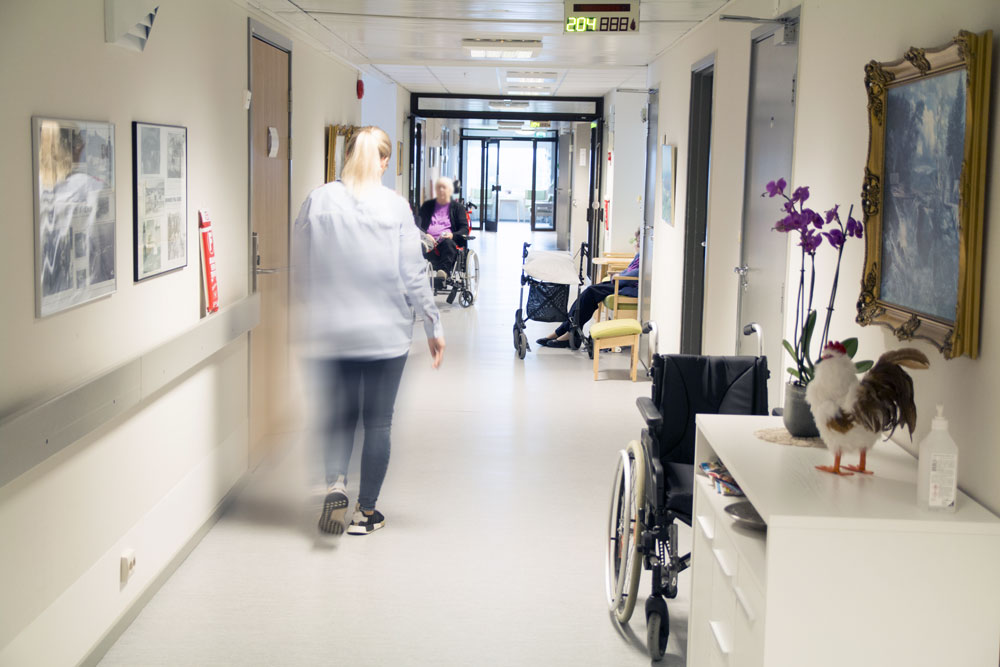 Foto: Mostphotos
 - 2026-07-06 04:00 03 Ledarskap
- 2026-07-02 04:00 09 Mat och måltid
- 2026-06-30 04:00 19 Samhället utanför
- 2026-06-29 04:00 17 Psykisk hälsa
- 2026-06-26 04:00 10 Aktivitet o funktionsbevarande arbetssätt