This article is written based on Swedish conditions and translated with AI. Hopefully it can inspire those interested in other countries. Handling a catheter bag – advice for care staff, patients, and relatives
A urinary catheter is used when a person cannot empty their bladder on their own or needs to have their urine output monitored. The catheter carries the urine from the bladder to a collection bag. For the treatment to work well and to reduce the risk of complications, good hygiene, proper handling, and regular monitoring are required.
 Foto; Mostphoto
What is an indwelling catheter?
An indwelling catheter is a thin, soft tube that remains in the bladder for an extended period. It is held in place by a small fluid-filled balloon inside the bladder. There are two common types:
• IDC (indwelling catheter via the urethra): The catheter is inserted through the urethra into the bladder.
• Suprapubic catheter: The catheter is inserted through the skin on the lower abdomen directly into the bladder.
The catheter is usually connected to a urine collection bag (leg bag or night bag) or a catheter valve that is opened when the bladder needs to be emptied.
Basic principles when handling a catheter bag
The most important rule is that the catheter system should be kept as closed and clean as possible. Each time the system is opened, the risk of bacteria and urinary tract infection increases.
Usually, the following applies:
• The catheter bag is changed about once a week or as prescribed.
• The bag is emptied as needed or when it is about half to two-thirds full.
• As care staff, it is good to document when the bag was changed and approximately how much urine has been collected. This is to detect early if there is a blockage in the catheter.
• The catheter is usually changed by a nurse every 2–3 months.
Preparation and hygiene
Good hygiene is crucial to reduce the risk of infection. Before you handle the catheter or catheter bag:
• Wash your hands thoroughly with soap and water.
• Preferably use a plastic apron during care.
• Prepare a clean work surface.
• Have all materials within reach.
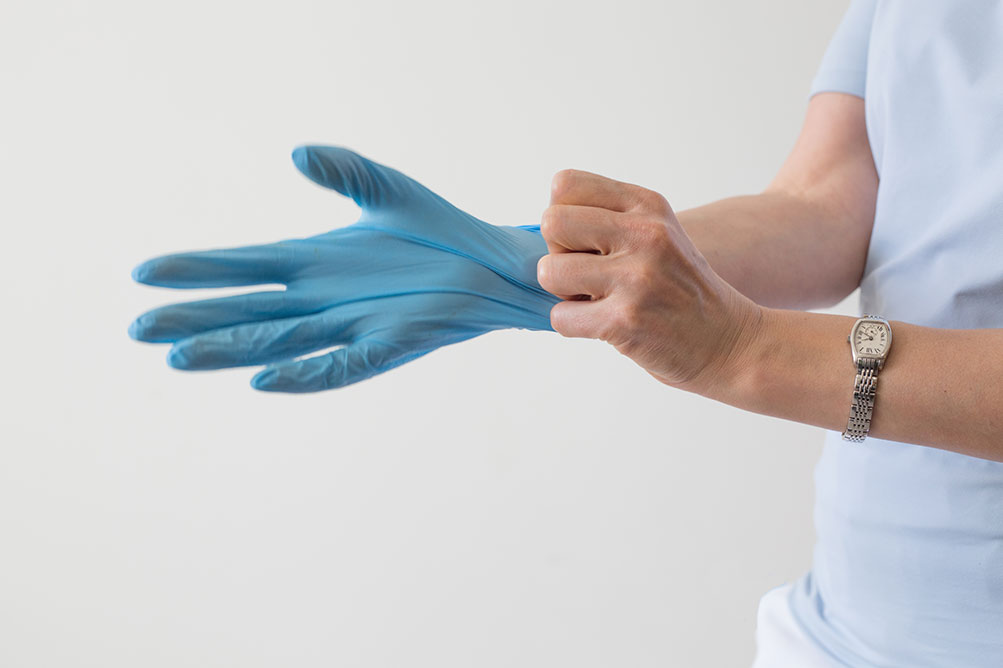
• As care staff, use gloves when there is a risk of contact with bodily fluids.
It is also important to:
• Avoid touching connections or openings with your fingers.
• Make sure the tap on the new bag is closed before connecting it.
How to change a catheter bag
When changing a catheter bag, it is important to work calmly and hygienically.
Prepare materials
• New catheter bag
• Hygiene underlay or paper
• Possibly a plastic apron
• Wash your hands
Removing the bag
• Empty the urine into the toilet before disconnecting the bag (unless the patient is bedridden, etc.)
• Hold the catheter tube.
• Disconnect the bag with a careful twisting motion.
• Avoid touching the openings.
Attach the new bag
• Attach the new bag securely.
• Check that the connection is tight.
• Wash your hands again.
The old bag is disposed of in household waste.
Placement and fixation of the catheter bag
How the catheter bag is placed affects both function and comfort. The bag should always be positioned lower than the bladder. This allows urine to flow freely and prevents urine from flowing back toward the bladder. Avoid letting the bag rest on the floor. This reduces the risk of bacteria.
Secure the bag firmly.
A leg bag should be attached with:
• leg straps
• a special fixation stocking
This prevents pulling on the catheter and reduces the risk of injury to the urethra.
Avoid kinks and loops. The catheter tube should lie freely and not be bent, pinched, or stretched.
Night bag
Some people use a larger night bag when they sleep. It is connected to the catheter or the tap of the leg bag.
Advantages:
• you do not need to empty the bag during the night
• better sleep
• less risk of an overfilled bag
The night bag should hang, for example, from the side of the bed – not lie on the floor.
Hygiene and daily care
Daily hygiene reduces the risk of infection.
• Wash the genital area daily with mild soap and water.
• Wash your hands before and after handling the catheter and bag. Use gloves.
• Wash the part of the catheter tube that is near the urethra.
For men
• Retract the foreskin.
• Wash the glans.
• Dry thoroughly and pull the foreskin forward again.
For women
• Separate the labia.
• Wash around the urethral opening.
Making the catheter more comfortable
Living with a catheter can feel unfamiliar at first. Small adjustments can make a big difference for comfort.
• Use sturdy underwear that keeps the bag in place.
• Alternatively, use looser clothing if pressure feels uncomfortable.
• Check that the tube does not pull or chafe.
• Secure the catheter to the skin to reduce tension.
For men, it is often recommended to:
• fold the penis up toward the abdomen
• secure the catheter with tape
This reduces the risk of injury to the urethra.
Fluid intake and prevention of blockages
It is important for urine to flow well through the catheter. The recommendation is often to drink about 1.5–2 liters per day, unless otherwise prescribed.
This can:
• reduce the risk of blockage in the catheter
• dilute the urine
• help flush the system.
People with heart or kidney disease should follow their doctor’s advice regarding fluid intake.
Common problems for catheter users
Leakage may be due to
• the connection not being secure
• the catheter being bent
• bladder spasms
• blockage in the catheter
Signs of blockage in the catheter
• no urine in the bag
• pain or pressure in the lower abdomen
Symptoms of urinary tract infection
• fever
• chills
• cloudy or foul-smelling urine
• pain
When should you contact healthcare?
Contact a nurse or health advice service if:
• no urine flows into the bag
• urine becomes heavily blood-stained
• there is significant leakage of urine beside the catheter
• you develop fever, pain, or chills
• the catheter has slipped out
In case of severe symptoms, contact healthcare urgently.
What is not allowed without a license or delegation?
Some tasks may only be performed by licensed personnel or after delegation. This includes, for example:
• inserting a catheter
• removing a catheter
• flushing a catheter
• changing a catheter
• medical assessment of catheter problems
Care staff without delegation may usually:
• empty the catheter bag
• change the catheter bag according to instructions
• observe and report deviations
• assist with hygiene and fixation
It is important always to follow local procedures and instructions from the responsible nurse.
Summary
Good care of the catheter and catheter bag is mainly about three things:
• Hygiene: wash your hands, use gloves, and keep connections clean.
• The bag should always be lower than the bladder, and the tube must not be bent.
Observation
Be alert to changes such as blockages, leakage, fever, or pain. With proper handling, many complications can be prevented, and the person with the catheter can have a safer and more comfortable everyday life.
Reflection questions – catheter care
Care staff
• How can we in our daily work ensure good hygiene and correct handling of the catheter bag to reduce the risk of infection for the resident?
• What can we do to detect early signs of problems with the catheter, and how do we ensure that information quickly reaches the nurse?
Manager, nurse, occupational therapist, and physiotherapist
• How can we together create conditions so that care staff can work safely and follow routines regarding catheter handling?
• How can we work in a person-centered way to increase comfort, independence, and quality of life for people living with a catheter?
Residents and relatives
• What is important for you to feel safe and comfortable in everyday life when you have a catheter or are helping someone who has one?
• What information or support would help you better understand how to care for the catheter and catheter bag?
Erland Olsson
Specialist Nurse
Sofrosyne - Better care every day

Aktuellt i media
-
2026-03-10 04:00
12 Personlig omvårdnad
This article is written based on Swedish conditions and translated with AI. Hopefully it can inspire those interested in other countries. Handling a catheter bag – advice for care staff, patients, and relatives
infoFoto; Mostphoto - 2026-03-09 04:00 16 Sjukdom och död
- 2026-03-04 04:00 04 Bemötande
- 2026-03-03 04:00 16 Sjukdom och död
- 2026-02-26 04:00 11 MTP
- 2026-02-23 04:00 01 Kvalitet